
$0diesel cost avoided
Hydrogen integration for the fleet already at sea.
Newlight adds precisely controlled hydrogen to existing marine diesel engines, cutting fuel consumption and emissions without replacing the vessel or its powertrain.
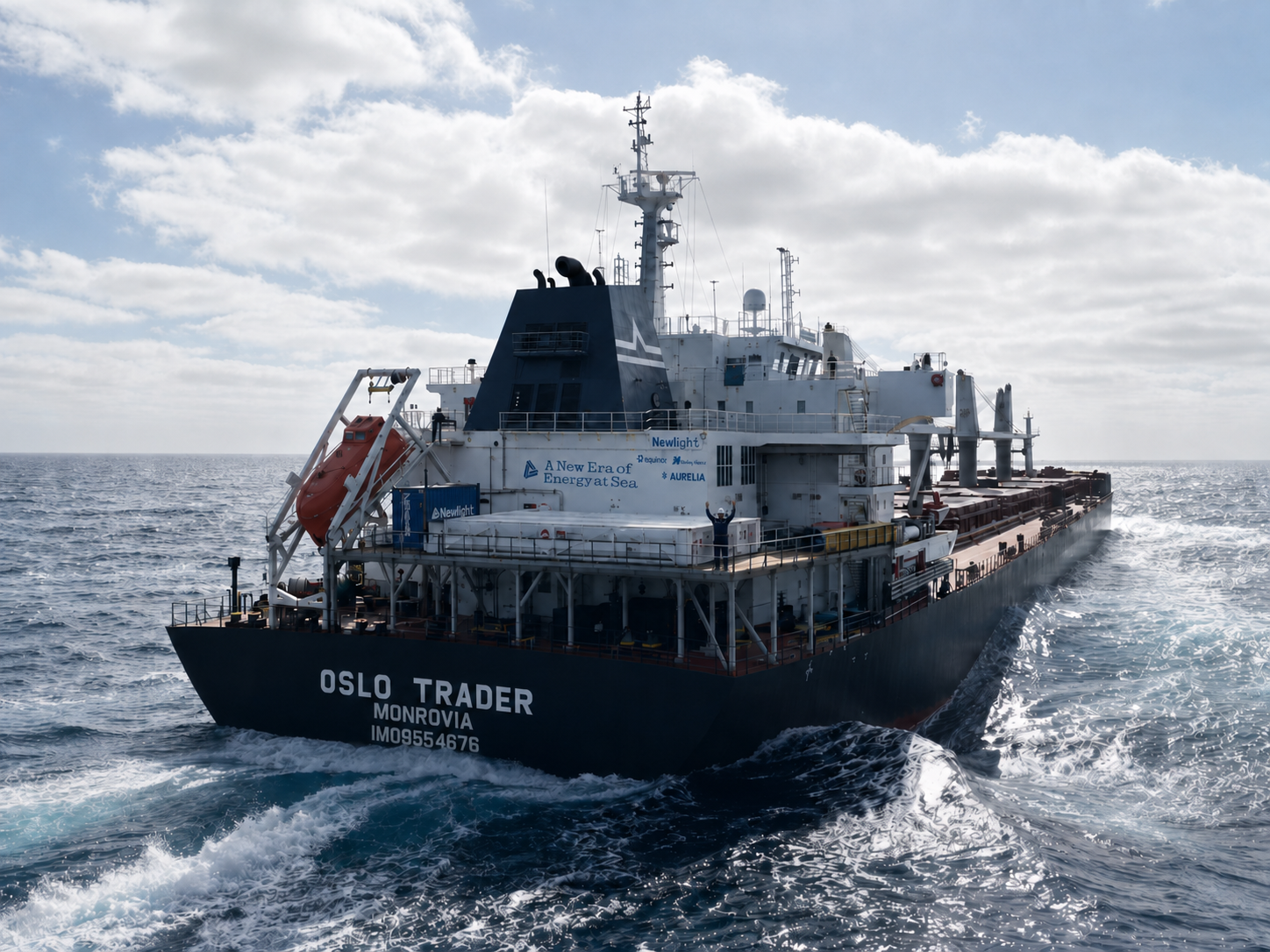
24%less diesel
28%lower CO₂
2 weekstypical installation
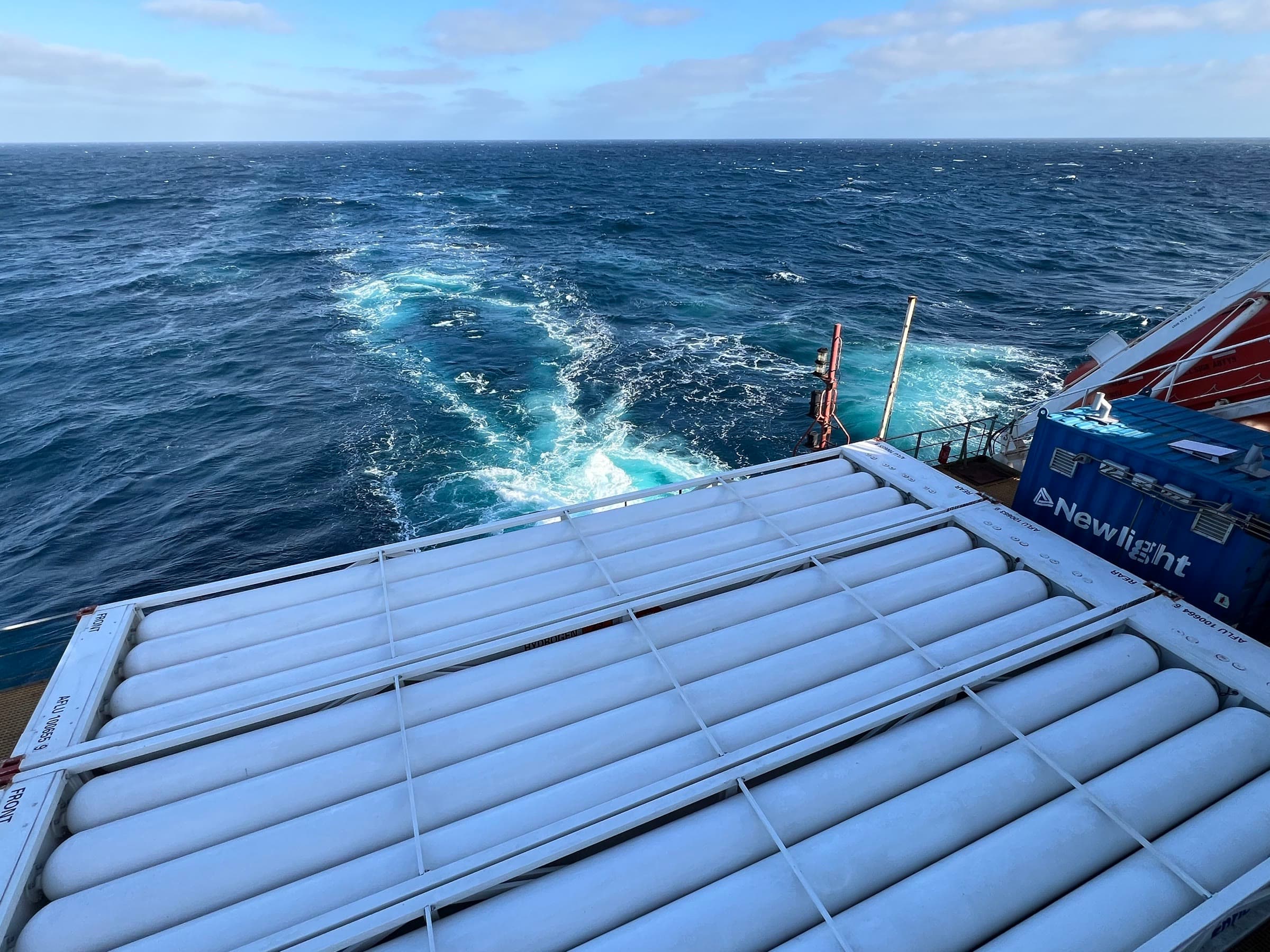
Cleaner shipping starts with the fleet already at sea.
Fuel represents roughly 50–60% of vessel operating expense.
Estimated net annual operating benefit$0
For 1 vessel under the selected reference case.
$0reference hydrogen supply
$0carbon value where applicable
$0estimated five-year savings
A practical hydrogen retrofit for existing diesel engines.
Hydrogen supply
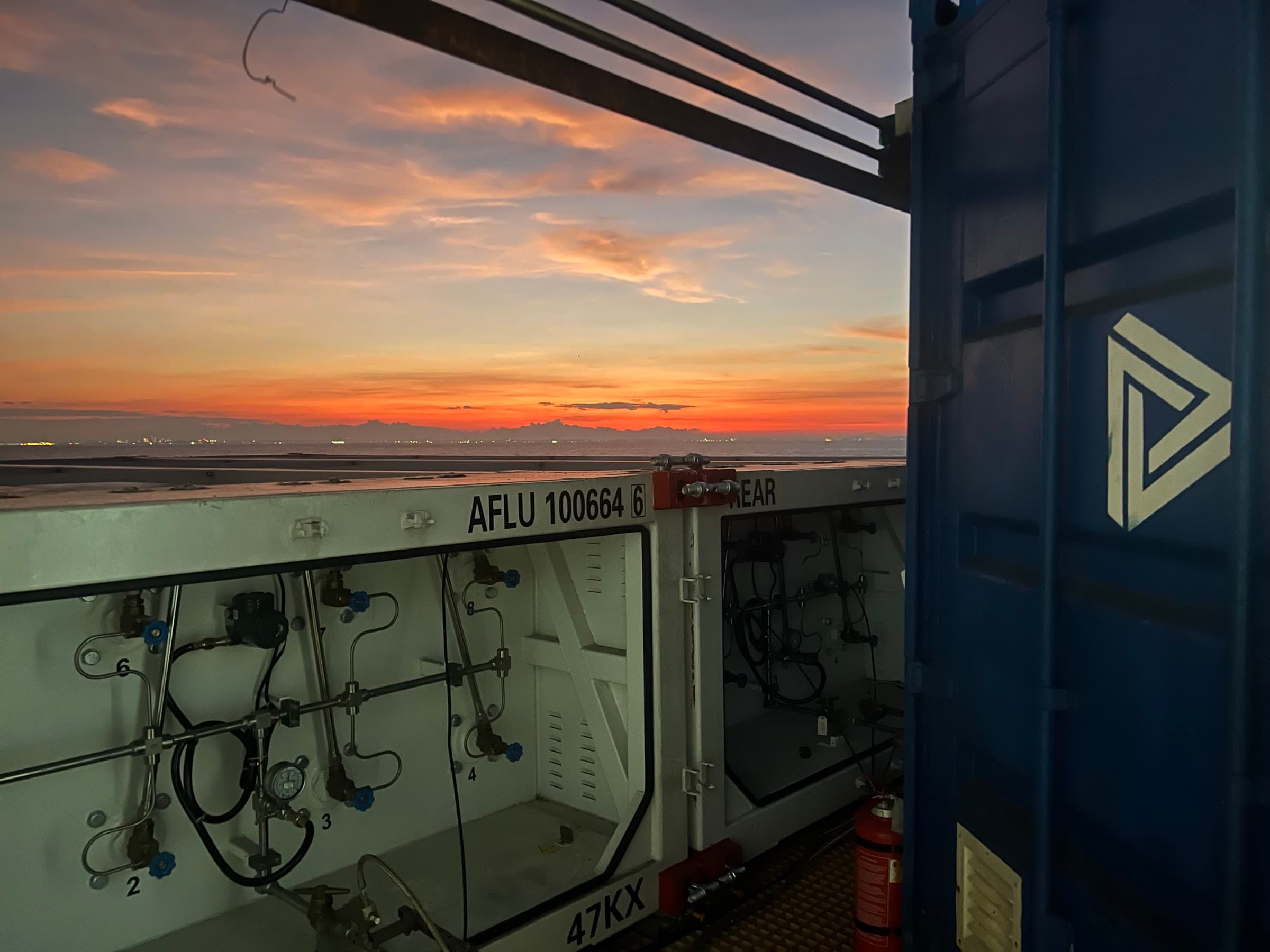
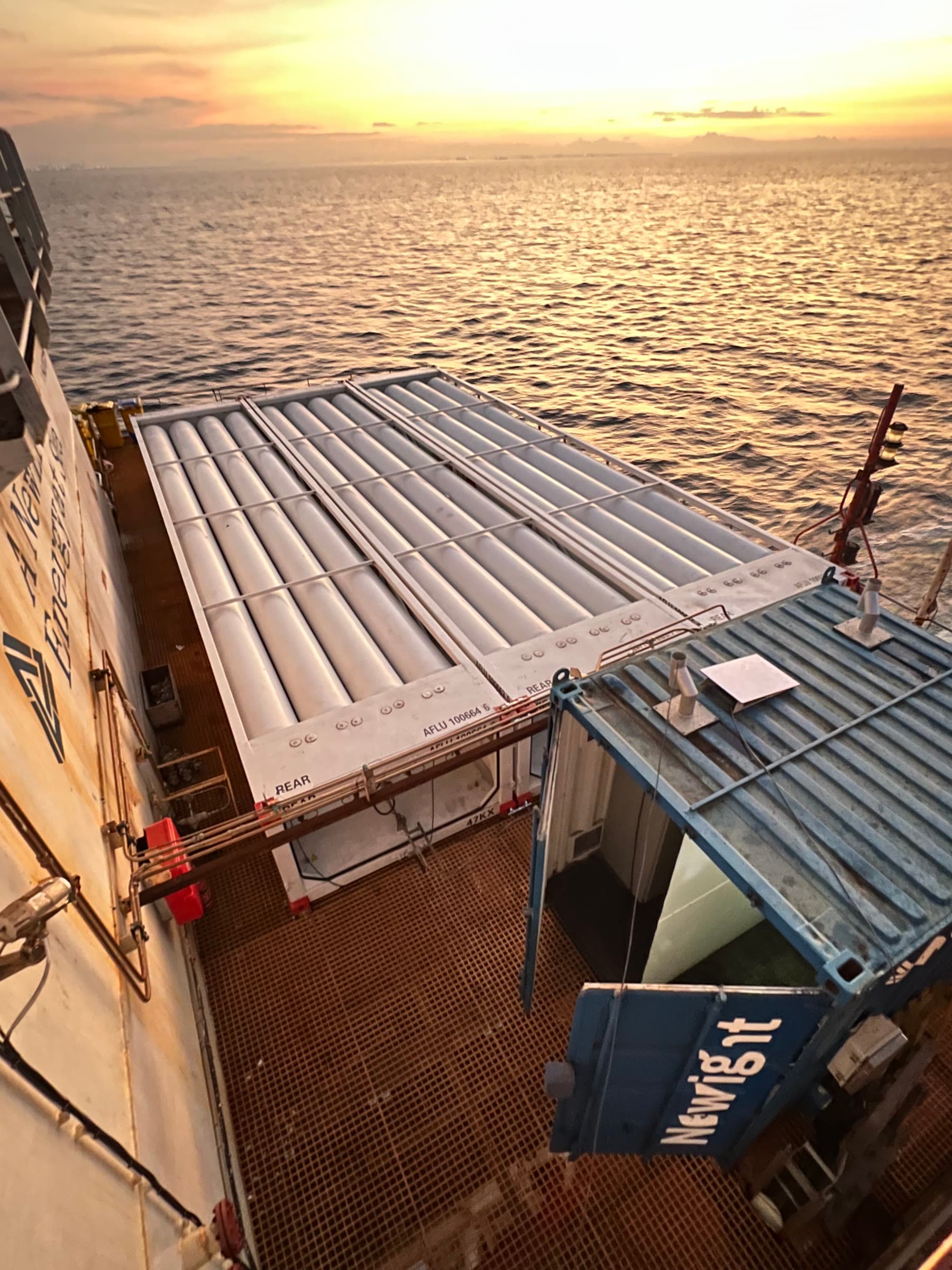
The supply system conditions hydrogen from onboard storage to the pressure and flow range required by the engine. Regulation, isolation, and monitoring hardware maintain stable delivery while preserving the vessel's existing diesel fuel path.
Hydrogen Control
The control system continuously evaluates engine demand alongside pressure, temperature, flow, and safety signals. It adjusts hydrogen delivery in real time and isolates the supply whenever operating conditions fall outside the validated range.
Hydrogen Supply1
Diesel Supply
Hydrogen Control2
Marine Diesel Engine
Regulatory approved
Newlight completed a major regulatory milestone with a four-day Factory Acceptance Test and class review of its hydrogen retrofit system for two- and four-stroke main engines.
The review covered the full system, from hydrogen injection and engine response to controls, electrical integration, leak and fire detection, emergency shutdowns, and fuel changeover. The system was designed to the IGF Code and validated against class requirements for hydrogen-fuelled ships.
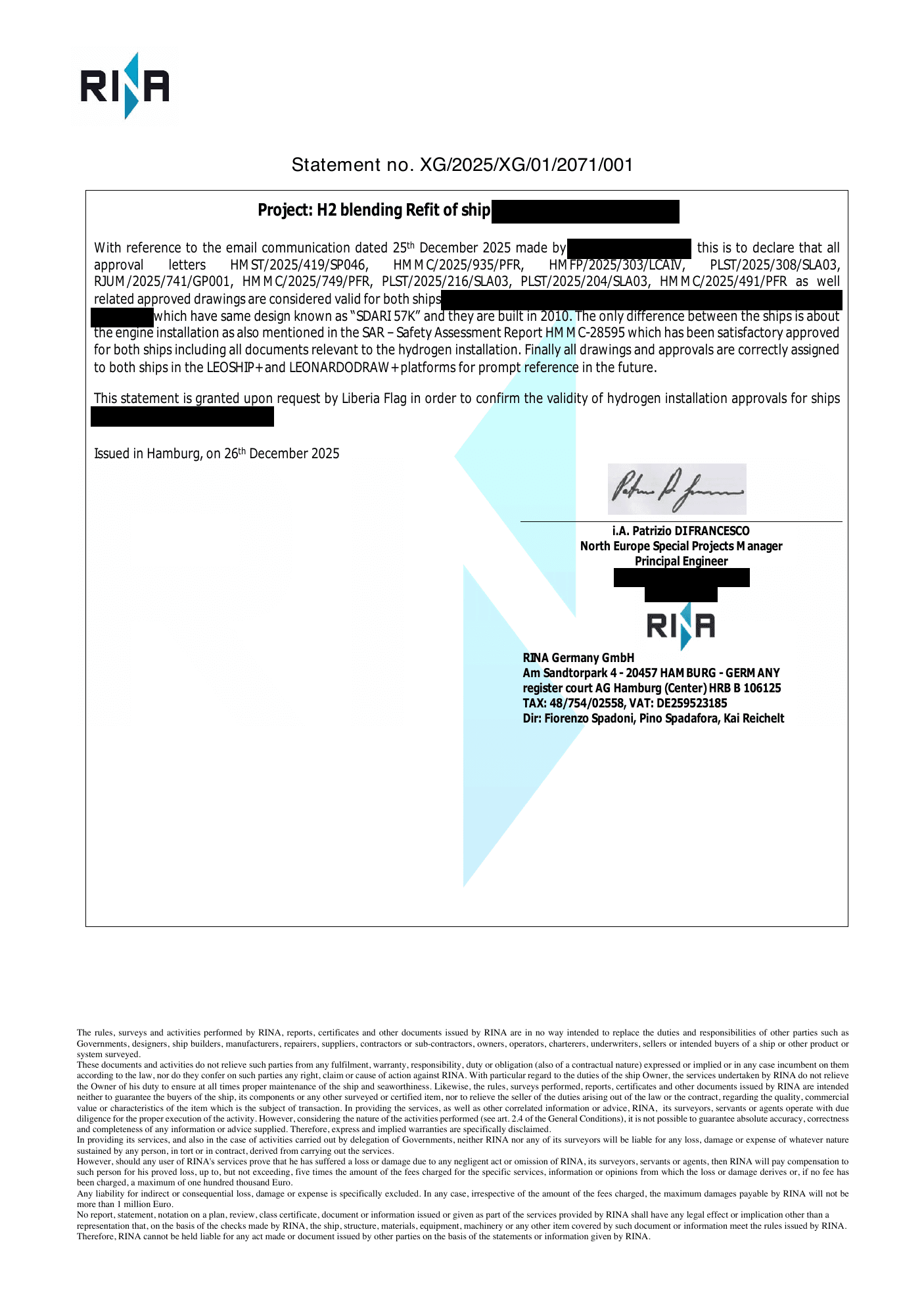
Class statementView statement
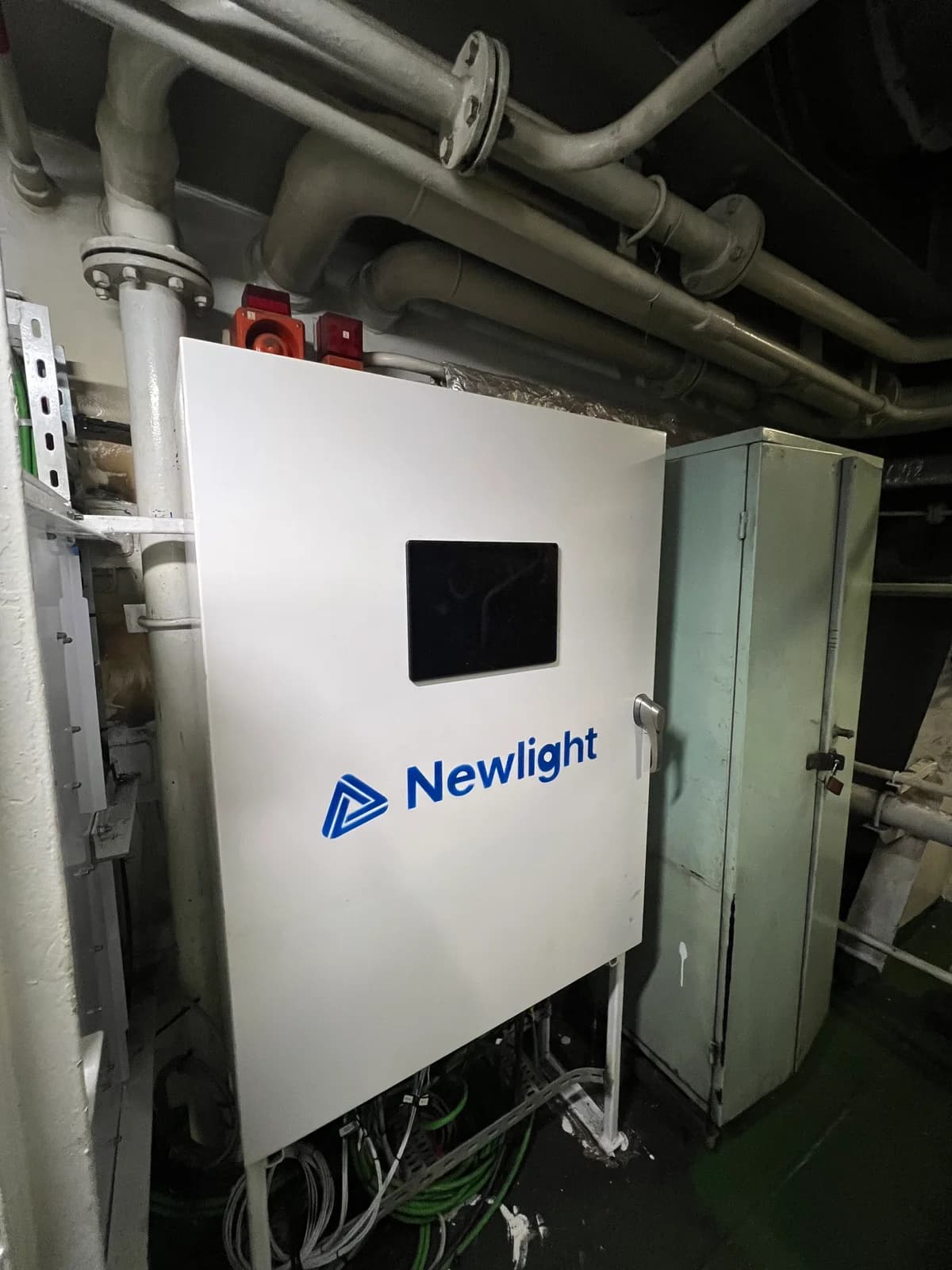
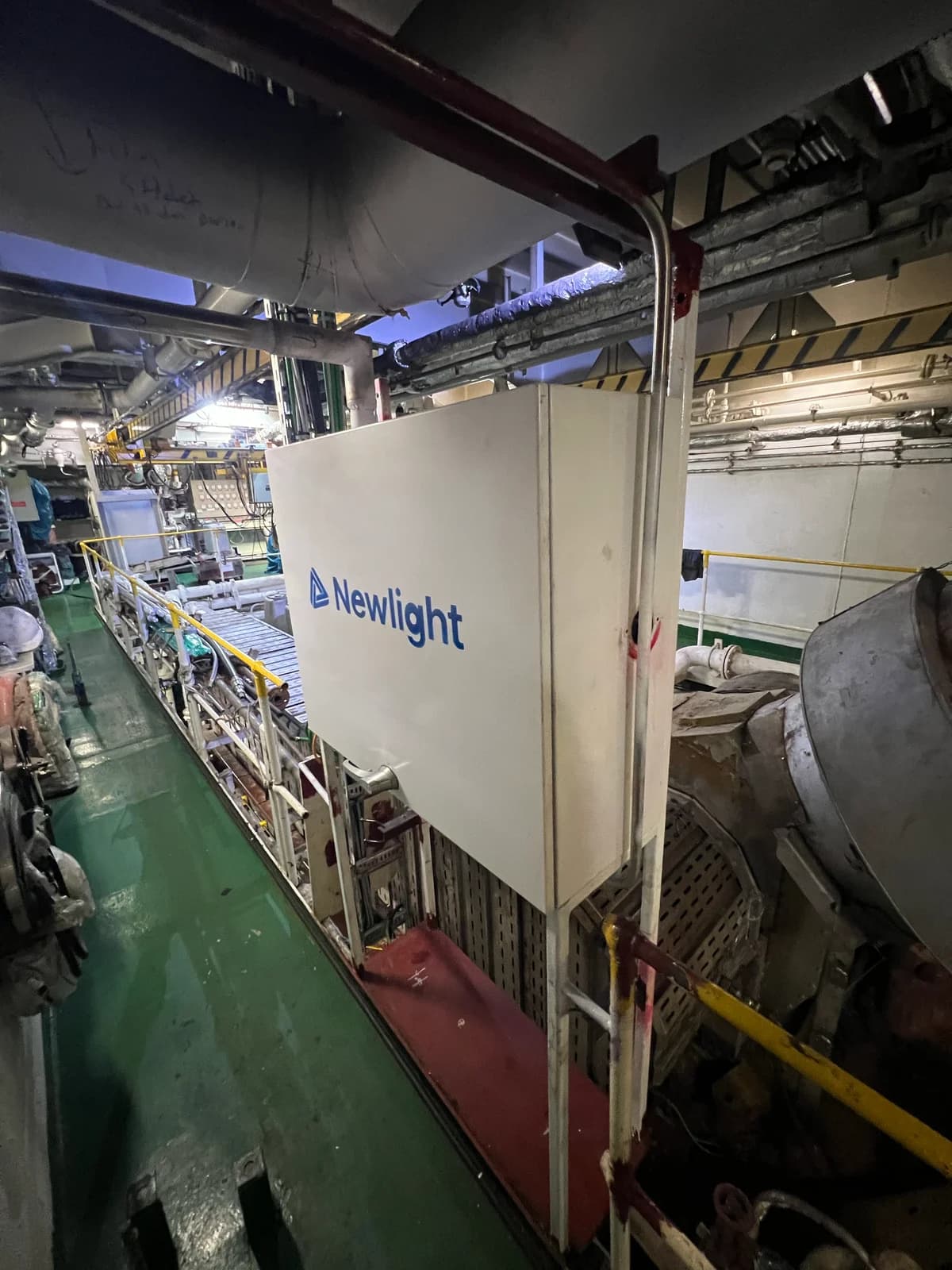
Safety layers, control and monitoring logic, and electrical integration were verified as one operating package.
Testing covered a four-stroke genset application and two-stroke main propulsion across representative duty profiles.
Fire and leak detection, local and remote emergency stops, system-state transitions, and conventional-fuel changeover were exercised.
Every engine state gets the right hydrogen flow.
Newlight's System Controller reads engine load and onboard safety signals, then adjusts hydrogen delivery as operating conditions change. The vessel's existing controls remain in command of the diesel engine.
If any pressure, flow, temperature, fire or leak reading moves outside its safe range, hydrogen delivery is reduced or stopped automatically. The engine continues on diesel, so the vessel is never dependent on the hydrogen system to operate.
Engine informationLoad · RPM · operating state
Pressure sensorsSupply · rail · injection
Mass flow sensorsLive hydrogen delivery
Temperature sensorsFuel-path temperature
Fire detectorsEngine-room safety signal
Hydrogen leak sensorsContinuous atmosphere sensing
Thermal probesCritical surface monitoring
.721.00−.18.41.08.64.92−.04.37.16.81.24
System ControllerReal-time controlHydrogen InjectionTimed, metered delivery
Optimization StrategiesAdaptive operating maps
Early Fault DetectionAbnormal behavior identified

Typical deployment
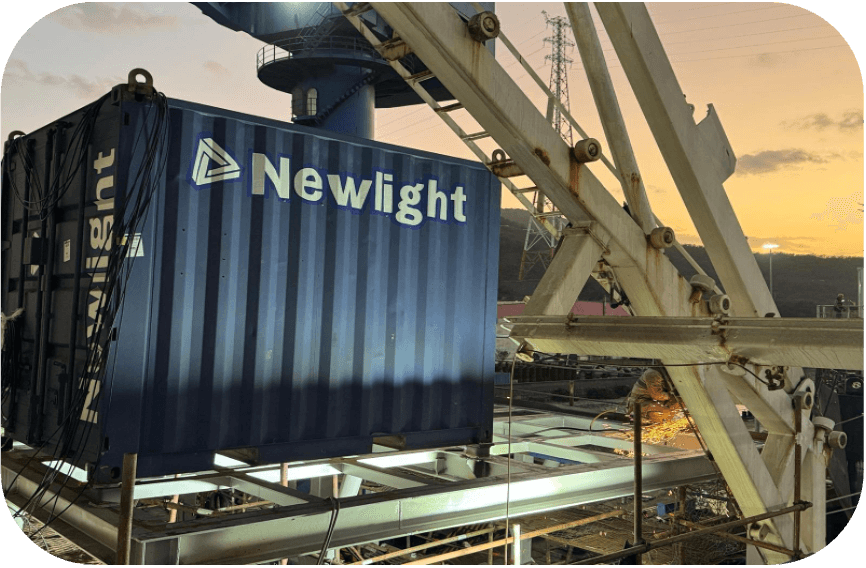
From vessel survey to commissioned operation, each retrofit is planned around the ship's existing maintenance schedule.
1.Survey the vessel
Document the engine configuration, machinery-space footprint, vessel interfaces, operating profile, and planned maintenance window. This establishes the physical and operational baseline for the retrofit.
2.Design the integration
Develop the vessel-specific arrangement for hydrogen delivery, control, injection, and safety systems. Interfaces and class requirements are coordinated around the existing engine before installation begins.
3.Fit the hardware
Install and connect the modular hardware during the vessel's planned maintenance period. The work is sequenced to limit disruption while retaining the existing diesel system.
Start with the vessel you already operate.
Share the engine platform, vessel profile and operating pattern. Newlight will map the integration path and expected savings.